Benchtop Labeling Machine Series
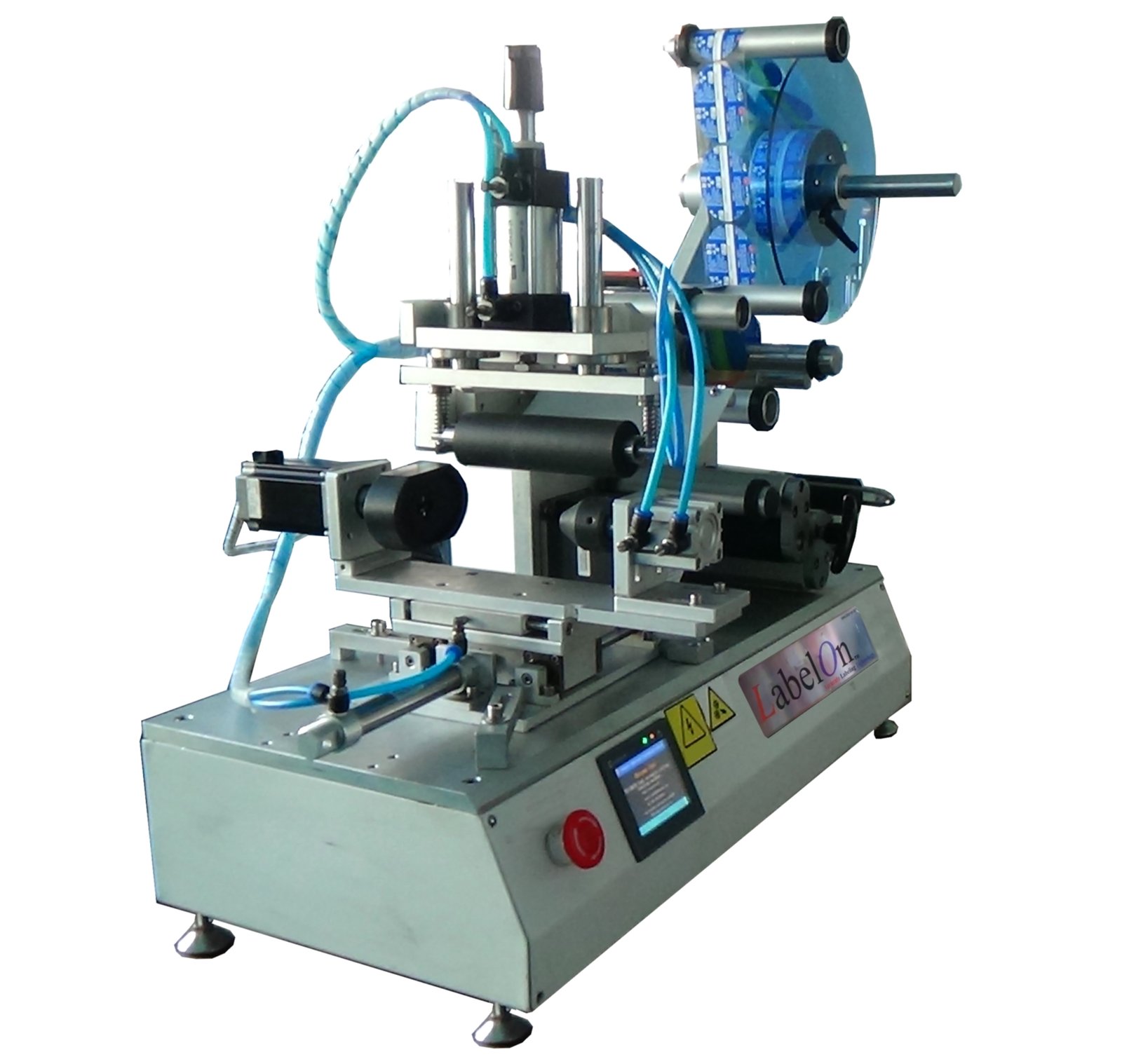
LabelOn™ is pleased to add to its range, a machine that will provide relief to those struggling to hand label Oval or Flat and near Flat products.
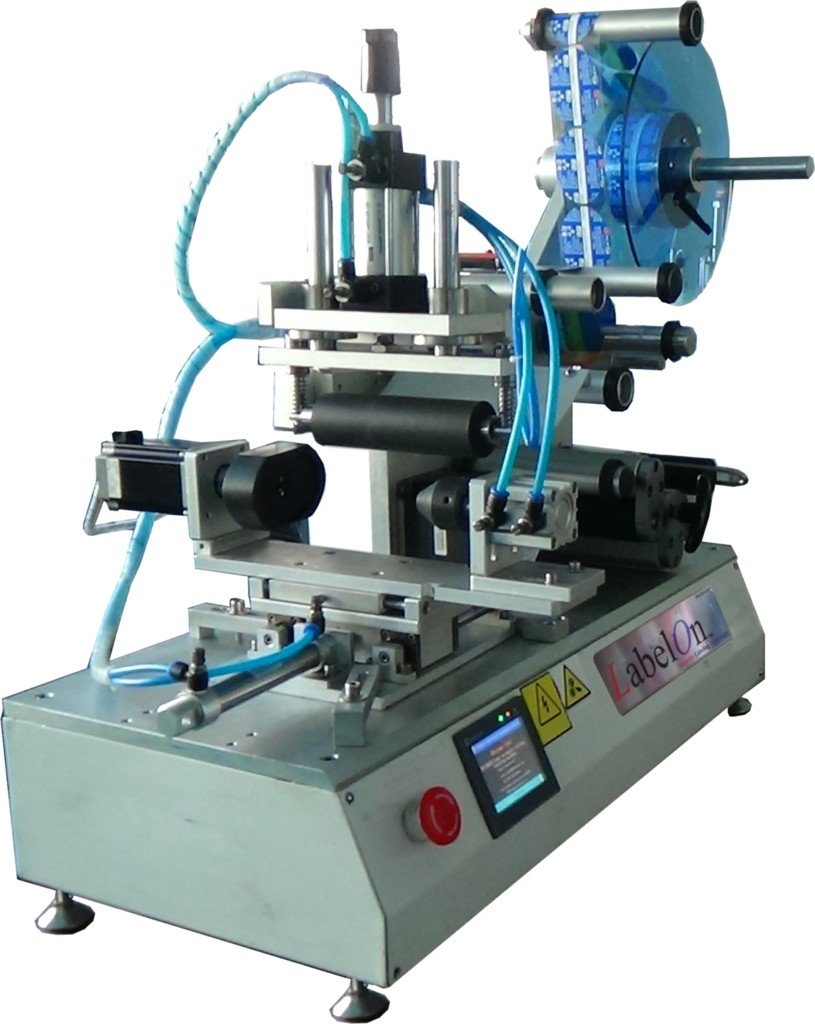


LabelOn™ is pleased to add to its range, a machine that will provide relief to those struggling to hand label Oval or Flat and near Flat products.
Suitable for various flat products such as plastic boxes, DDR, note book, aluminum foil bags, etc. It can be connected to production line to increase production.
If you have requirements of 1000 pcs a week or more, the LabelOn™ Bechtop Flat and Oval 1 or 2 labels machine will pay for itself extremely quickly. It will also make your shelf presence look like you were using accurate packaging equipment 4 or 5 times more expensive than this unit.
We can even configure this machine (at point of manufacture) so that it achieves an astonishing feat – a single full wrap of an oval product!!
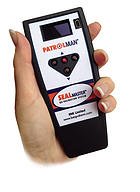
The SealMaster™ is a quality control instrument that helps maintain the optimum induction seal quality at all times by independently validating induction sealer outputs and process settings.

The SealMaster™ measures the energy transmitted from the induction sealer to the induction liner contained in the closure. It compares this measurement to predetermined values to confirm that the induction sealer is correctly set and functioning.
The SealMaster™ process is much more accurate than just using the controls on the induction sealer. The induction sealer can only measure the output energy that is generated and does not include the effect of the distance from the induction sealer head to the closure, speed of the conveyor, both of which have a critical effect on the input energy into the induction liner within the closure.
The SealMaster™ transmitter is contained in the container as it travels down the production line, so it measures the inductive energy that is being transferred into the induction liner. This automatically takes into effect all factors that affect the quality of the induction seal.
The SealMaster™ also assists with fault diagnosis if sealing problems do occur. It will detect whether the problem is with the sealer (either faulty equipment or faulty settings) or if elsewhere (induction foil, bottle neck, application torque).
The SealMaster™ is one of the products in the Line Patrolman™ range; its sophistication uniquely processes data to give recommended settings for various containers / closures and warns if these recommended settings are not being maintained.

The LineMaster™ is a new quality control instrument for improving induction sealing. It enables users to quickly and accurately set up their induction sealers then monitor, control and validate the process to ensure the best possible induction seal quality at all times.
The LineMaster™ independently measures the induction energy being transferred from the induction sealer into the induction line; taking the trial and error out of the induction sealing process and ensuring that the best possible seal quality is achieved at all times.
The LineMaster™ passes under the induction sealer to measure the energy being received by the induction liner. In use, the The LineMaster™ is attached to two containers passed down the production line underneath the induction sealer.
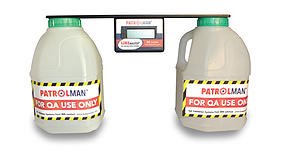
 The LineMaster™ reading on its digital display is a combined effect of all the process variables – from the induction sealer output to the gap beneath the bottle sealer head and conveyor speed – in a single value.
This is a clearer and more accurate means of controlling the induction sealing process than was previously possible.
Many hidden component can hugely impact the performance of an induction liner. This is why it is highly advisable to use a gaugeable validation QA system for induction sealing. During the induction sealing process, there are a number of risks involved that can easily change the speed of the induction machine such as knocking the induction machine out of line, difference in bottle height, adjustment in the conveyor speed and other adjustments.
 Successful induction sealing is a time and position dependent process. If a product passes through the induction sealing head at varying speed, the sealing result will be different.
A well trained and seasoned operator is knowledgeable on the things to watch for throughout the course of the sealing process. This include, but not limited to, correct settings, even or uneven sealing and overheating. He can discern these problems easily; however, such operators are not always available to every business operation. This is where the need for Line Patrolman™ come into being.
The Line Patrolman™ range of products replaces all subjective judgements with measurable statistics collected together for reference. Some changes that could go unnoticed by an operator may include the following: an alteration in the speed of the product conveyor of up to 10%; 1mm height adjustment of the sealing head; 5° angle change in guide rails. Any one of these changes can make a negative difference on the sealing results even though the induction machine settings show no change at all.
The Line Patrolman™ equipment provides a visual and measured count of the energy that is transferred between the induction equipment and the induction seal. This validation occurs when the Master Sensor is passed along the same path as the products during a production run. The Line Patrolman™ range takes away the guess work on the amount of energy that is being transferred and provides the operator with confidence that the filling line is set to the optimized settings, giving the brand owner peace of mind and the consumer a perfect package every time.
The Line Patrolman™ range has dedicated equipment that meets the requirements of the different filling lines, whether you need the LineMaster™, a flexible system for a variety of bottle shapes and sizes operating at lower speeds, or the SealMaster™, a dedicated system for high speed lines that have minimal variation in the size of the container and closure.
The MeRo 2KW Air Cooled unit is a reliable workhorse with standard features that many quote as confusingly priced options. It is what we call the medium priced high end machine.
The machine has a Motorised Height Adjustment, Missing Foil Detection, and Bottle Accumulation Detection. It also has an energy trasnferred reading for process validation. This unit can be supplied with a flat sealing head or an ADJUSTABLE WIDTH tunnel sealing head.
Really built in Europe(Italy); not simply assembled with Chinese circuit boards and parts and then sold as a western made machine.
The MeRo equipment comes from the MeRo family of power electronics that includes Coronatreater that go well beyond 75KW !!; so you can trust that you are dealing with equipment manufactured by a company that knows how to build and handle power electronics.

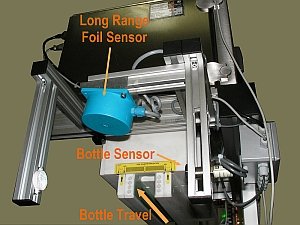
Supply voltage 3×380 V. 50 Hz three-phase
*Subject to Change
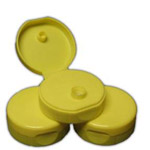
CONVEYOR SPEED: up to 30 m/min;
FOIL SIZE: 35 mm;
CAP SIZE: 55 mm ext. diameter;
CAP STYLE: flip top screw cap (see drawing);
BOTTLE MATERIAL: Plastic
Following frequent inquiries from smaller businesses, some start up companies, and testing labs looking for a reasonably priced induction machine, we have decided to make available a safe and affordable induction sealing unit.
Smaller businesses have low budgets in mind, but it doesn’t mean that they are ready to compromise machine safety and the integrity of their products. Regrettably, there are not too many good options available in the market. The majority of low cost induction sealing units do not present CE safety certification for LV and EMF.
The CE mark should be applied in order to legitimately market electrical and electronic products in the European Union (EU), but only after you have proven compliance with all applicable directives. Compliance is established by testing the applicable harmonized standards for the safety of electrical and electronic products in relation to the effects of electromagnetic fields (EMF) and EMC on the functional safety of equipment. CE marking requirements now include compliance with electromagnetic field and electromagnetic compatibility standards. Manufacturers must ensure that products already on the market comply. This is precisely the reason why almost all other low cost induction sealing units do not have this CE safety certification.
The conception of SealerOn100™ was brought about by this need to supply the market with a machine that is certified safe and efficient. Induction machines generate high current and high electromagnetic field to accomplish their tasks. The birth of SealerOn™-100 has filled a gap in the SealerOn™ range that has provided a dependable solution to higher throughput equipment our clients are familiar with and put their trust in.
Immediately after its initial launch, we were flooded by a large number of inquiries. The unit is fully serviceable and it is fashioned to have its main electronics replaced in under 5 minutes! Watch our video:
Induction sealing is a straightforward and simple process but an efficient way to seal bottles. The filling machines fill the bottles and are capped at some point. The plastic cap has an aluminium foil liner inside. Once the capped bottle passes under the induction sealing machine, which transmits electromagnetic energy to the foil liner, the liner becomes hot and welds itself to the neck of the container which remains in place even when the cap is removed. The aluminium foil provides a tight seal that helps prevent leakage, provides tamper evidence and can improve the shelf life of the product.
For small production run of sealing a few hundred units a day, SealerOn™-100 is a good solution. Highly recommended for:
When you have time to properly align the sealing head visually, the SealerOn™-100 can be supplied with just a sealing head or wand. To insure a steady and even sealing, it is essential that the sealing head is level and well centered. The option of a stand to hold the sealing head and a locating bracket that aligns the product under the sealing head is made available to eliminate alignment errors.
We are proud of our SealerOn™ range of induction sealing equipment that performs reliably, safely and are easily serviced. We are delighted to be able to present a realistic and safe alternative for those in need of low budget, bench top or hand held induction sealing machine.
A three Lane Piston Filler and Heat Sealing machine was combined for packing creamed honey.
The filling and sealing Speed of this three lane system is designed for up to 40 Tubs per minute. Less viscous product could be filled faster. Higher speeds are of course possible with wider equipment fitted with more lanes.
Our SealerOn fully automatic filler and heat sealer equipment calls for minimal operator intervention. Normally, operators only need re-supply packaging components simply by loading supply hoppers and also taking away completed cartons.
Be among our satisfied clients around the globe who are proud owners of SealerOn brand production machinery. Contact us today for your production requirements.
When looking into whether to use a pressure sensitive tamper evident seal or an induction seal it is a good idea to understand the core reasons behind applying tamper evident seals and induction seals to bottles and jars.
For induction sealing the key benefits from that type of seal include: 
For pressure sensitive sealing – sometimes called PS22 Wadding the key benefits from that type of seal are reduced:
Pressure sensitive wadding is susceptible to someone that can come along and carefully peel such a liner partially off the neck of a bottle and then simply tighten the cap again to apply pressure and re-seal the bottle; no equipment or tools is required. In this way bottle sealing with pressure sensitive cap sealing is more visual than practical.
Pressure sensitive cap lining material usually has no foil barrier and therefore has little to no barrier properties to lengthen shelf life or preserve freshness. Being glue based, many liquid contents are not suitable for pressure sensitive or PS22 cap sealing.
So why do companies choose pressure sensitive sealing materials over induction foil sealing?
In some cases it is ignorance of the induction sealing process and in other cases it is the “poor man’s” version of a tamper evident seal.
Induction sealing tamper evidence requires induction sealing machinery. Pressure sensitive sealing requires no machinery.
Safe bench top induction machinery can start at USD$3500.00. Beware there are many hand held induction machines on offer for sub USD$1000 and manufacturers of that level of equipment refuse to provide safety certifications or advise that they do not “yet” have the certification.
An induction machine is not like a toaster or a kettle so beware of anyone offering toaster or kettle prices for induction sealing equipment. An induction machine deals with high currents and produces high levels of magnetic and electrical fields.
If you find a retail product on the shelf with a pressure sensitive seal be aware that while it looks like it is tamper proof it is at best only ‘tamper evident’. The company producing that product is taking the cheapest path to providing you with a look that resembles but in no way performs like an induction seal or a tamper proof seal.
A Tunnel Induction Sealing Head lets you seal caps where the foil sits a distance greater than say 4 mm from the top surface of the cap; This is often the case with twist top spouts, flip top lids, sports drink caps, sipper caps or shaker caps.
Induction sealing is a process where a coil in the shape of an elongated loop is used to generate a fast oscillating high magnetic field. This magnetic field can change poles as many as 100,000 times every second.
The magnetic field can travel through air and plastic. When the magnetic field meets a metal surface, the magnetic field “induces” a high oscillating current in that metal surface in a plane that is parallel to the coils that generated the magnetic field.
A magnetic field generated from a “point” dissipates with the cube of its distance from that point.
In general, the magnetic field of an induction sealing machine needs to be within 5mm or ¼ inch from the sealing foil to obtain meaningful production speeds.
There are a large range of caps that do not fit the standard flat top profile and present a problem to bring the magnetic field of the heat sealing equipment to within 5mm or ¼ inch from the sealing foil.
These specialty caps need an adaption from a standard flat coil sealing head to a tunnel sealing head. The Coils are shaped to pass around the tunnel. The tunnel allows the protruding feature of the specialty caps to pass through the machine without lifting the plane of the magnetic field further away from the sealing foil within the bottle cap.
On the SealerOn website there is a youtube icon that will link you to videos showing SealerOn™ heat sealing or more accurately induction heat sealing using a tunnel sealing head.

The SealerOn™500 fitted with a sealing tunnel is capable of sealing at sealing speed up to 10 Meters per Minutes or 30 Feet per Minute depending on the cap and foil combination.
For faster induction sealing there is the MeRo adjustable tunnel sealing machines. These machines have the added and unique feature of having an adjustable width sealing head. Having an adjustable width enables higher concentrating and focussing of the induction field allowing for higher speed sealing. A MeRo 2Kw unit is capable of sealing at sealing speed up to 30 Meters per Minutes or 90 Feet per Minute depending on the cap and foil combination.
Efficient cap sealing means that less time is needed under the sealing head and hence higher production speed is possible.
A Flat profile sealing head will allow for a greater range of cap sizes and even allows for that Sealing head to be placed at an angle across the product’s path to achieve sealing of cap diameters that are even wider than the coil winding pattern within the sealing head. It is quite possible to have a Flat profile sealing head that can seal caps from 30mm to 110mm wide. The trade-off for the versatility of this profile sealing head on a heat sealing head is lower speed throughput and an inability to seal specialty caps.
As a result of many unknown variables which may significantly impact sealing results of an induction machine, an induction sealing process validation is highly advised.
The sealing machine could be bumped on a small angle, a slight height adjustment might have been made, large bottle height variations, and conveyor speed variations can all drastically impact the induction sealing results.
For properly trained operators, this process can be the best of all; in particular when they are competent exactly how induction foils look like when they have obtained the precise conditions for a good seal.
Some things to look for include:
a) A Concentric heat pattern in the foil; when you hold the foil to some light source with the accurate position you should observe a smaller sized circle where material was not heat affected. This implies the seal has heated externally then inwards in an even pattern; therefore a good seal.
b) Overheating – there are numerous of aspects to point out if there have been overheating including visual discolouration of one or more layers of the induction foil, bubbling or creasing, a flattening of the bottle neck, melting of a backing resealing foam (if there are any).
c) Unequal heat sealing; associated in some ways to (a) above; a foil can look nicely sealed but an unequal heat seal can result in aspects of the seal being too tightly “welded” or very lightly welded and more likely to “pop loose with some pressure on the side walls of the bottle/container.
So long as you have operators in each shift that happen to be properly trained in the above areas to consider, then the “subjectivity” of a visual process validation is reduced and the validation will hold more benefit.
Should you have doubts that you’re going to always have operators properly trained or experienced enough to cover what exactly is required for a
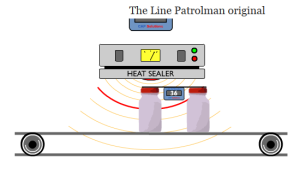
reliable visual process of validation for induction sealing then there is the straightforward option of a Linepatrolman™ which has no additional controls than a reset button.
This unit needs absolutely no programming and simply provides an built-in count of the energy seen by the testing cell moving about the same path as the products.
The Benefel site has a good animation of the Linepatrolman™
In this animation, the count gets up to “50”. If that reading worked for the last batch and was verified being a good reading by a very comprehensive visual assessment (as well as some leak screening), operators would look to obtain equivalent readings in next production runs of the same product.
Many organisations need an induction sealing measurement since the whole process is a time and position dependent. When there is speed variance as the product passes through the induction machine the outcome is likewise different. For an operator a 10% alteration of the speed of a product conveyor may not be found. To an operator a 1mm height adjustment of the sealing head most likely is not noticed or a 5 degree angle difference in guide rails could possibly be missed. The induction sealing setting on the induction sealing machine may not have changed at all, but the sealing effects would have changed considerably!
The Line Patrolman™ is a unique process validation device that can pick up changes in energy transfer in what may seem like an identical set-up to the last time an induction machine has been operated. This eliminates guess work on the energy transfer and give confidence that the machine is set to the ideal settings.
To understand this question of the sealing head shape we must first understand how an induction seal is achieved.
The sealing head is the part of the machine that is placed over the path of the product cap/lid. Within the sealing head is usually long oval shaped coils of thick wire that carry high current that changes direction many thousands of times a second. This creates a magnetic field at right angles to the coil that also changes direction many thousands of times a second. The magnetic field can travel through air and plastic but it does get weaker as it travels away from the coils that generated the magnetic field. When the magnetic field comes across metal, it will act to generate current in the metal.
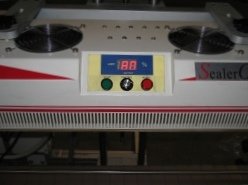
In the case of the heat sealing machine, it waits for a product that has a metal laminated foil in its cap. The magnetic field from the sealing head acts to generate current in the laminated foil and the laminated foil gets hot. Laminated to the foil is a layer that will melt or become “wet” with heat. When the product has completely passed from under the induction machine the foil will begin to cool and the layer that became “wet” will set to bond the laminated foil across the opening of the product.
From the above “theory” it can be understood that the sealing of a bottle or product using induction machines will depend on how long the product is under the magnetic field and how close it gets to that origins of the magnetic field.
The Flat profile sealing head is suitable for “Standard Flat Caps” . A “Flat Cap”, generally speaking, refers to a cap where the plane of the induction liner is within 4.0 mm of the plane of the Cap’s top surface.
The Tunnel profile sealing head is suitable for “Specialty Caps”. A Tunnel Induction Sealing Head lets you seal caps where the foil sits a distance greater than say 4 mm from the top surface of the cap; this is often the case with twist top spouts, flip top lids, sports drink caps, sipper caps or shaker caps.
The Tunnel sealing head concentrates the magnetic field to an area within the tunnel profile and hence provides stronger magnetic fields over a generally smaller width path for the products passing underneath. A Tunnel sealing head also allows the coils within the sealing head to have a path lower than the top of the product caps. This brings the magnetic field closer to the plane of the foil within “specialty caps”. The drawback to this Tunnel profile sealing head is that it is usually not very good for large caps and it does limit the range of cap sizes that can be efficiently sealed. There is a small exception to this rule with the MeRo™ brand induction sealer with an adjustable width tunnel profile. This machine can typically cater for a range of specialty caps with an adjustment of 30mm which would mean a typical cap diameter range of 30mm to 60mm could be very efficiently sealed.
Efficient cap sealing means that less time is needed under the sealing head and hence higher production speed is possible.
A Flat profile sealing head will allow for a greater range of cap sizes and even allows for that Sealing head to be placed at an angle across the product’s path to achieve sealing of cap diameters that are even wider than the coil winding pattern within the sealing head. It is quite possible to have a Flat profile sealing head that can seal caps from 30mm to 110mm wide. The trade-off for the versatility of this profile sealing head on a heat sealing head is lower speed throughput and an inability to seal specialty caps.
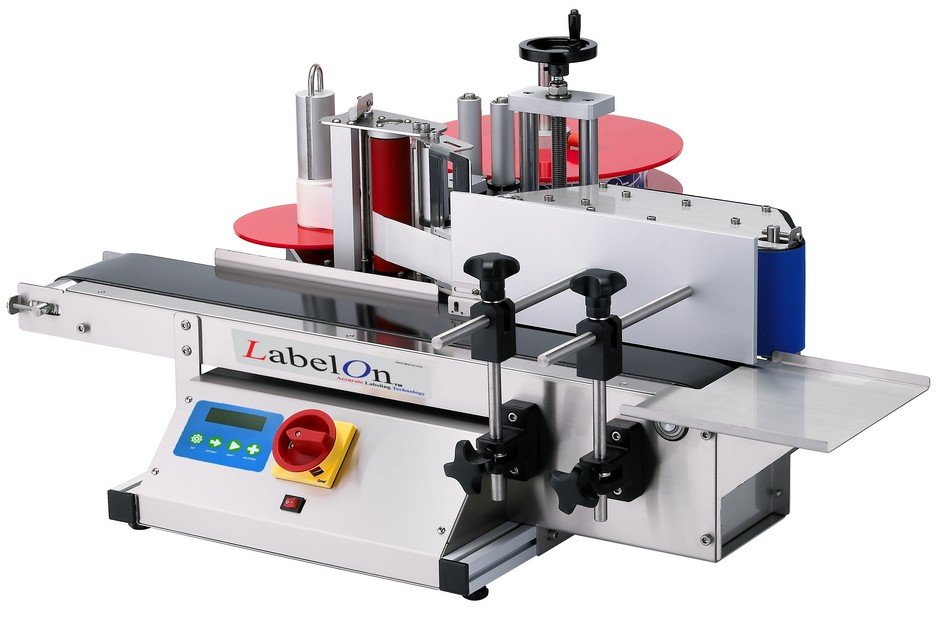
LabelOn™ is pleased to add to its range, a machine that will provide relief to those struggling to hand label Oval or Flat and near Flat products.


Can be widely used in various vertical round bottles. Suitable for small production.
Optional Accessories:
Label applicator:
Apply label:
Control System:
Wrap station:
Conveyor and frame:
Suitable for various flat products such as plastic boxes, DDR, note book, aluminum foil bags, etc. It can be connected to production line to increase production.

LabelOn™ Mini are Tabletop Labeling Machines with smaller footprints designed for smaller businesses or start up companies who understand the struggle of placing labels to their products by hand. They can be widely used in different size bottles designed for smaller production run.
The LabelOn™ Mini Tabletop Label Applicators do everything their more expensive counterpart machines do, but with the fraction of the cost. The demand for these smaller labeler machines is undeniable. Highly accurate, they will apply your labels quickly and efficiently which saves you valuable time and make a huge statement in the appearance of your finished product.


The LabelOn™ Modular represents a machine concept born from extensive labeling experience.This experience involved design, sales, and overseas distributor establishment. Distributors in over a dozen developed and emerging economies enjoyed remote servicing, sales support and frequent visits.
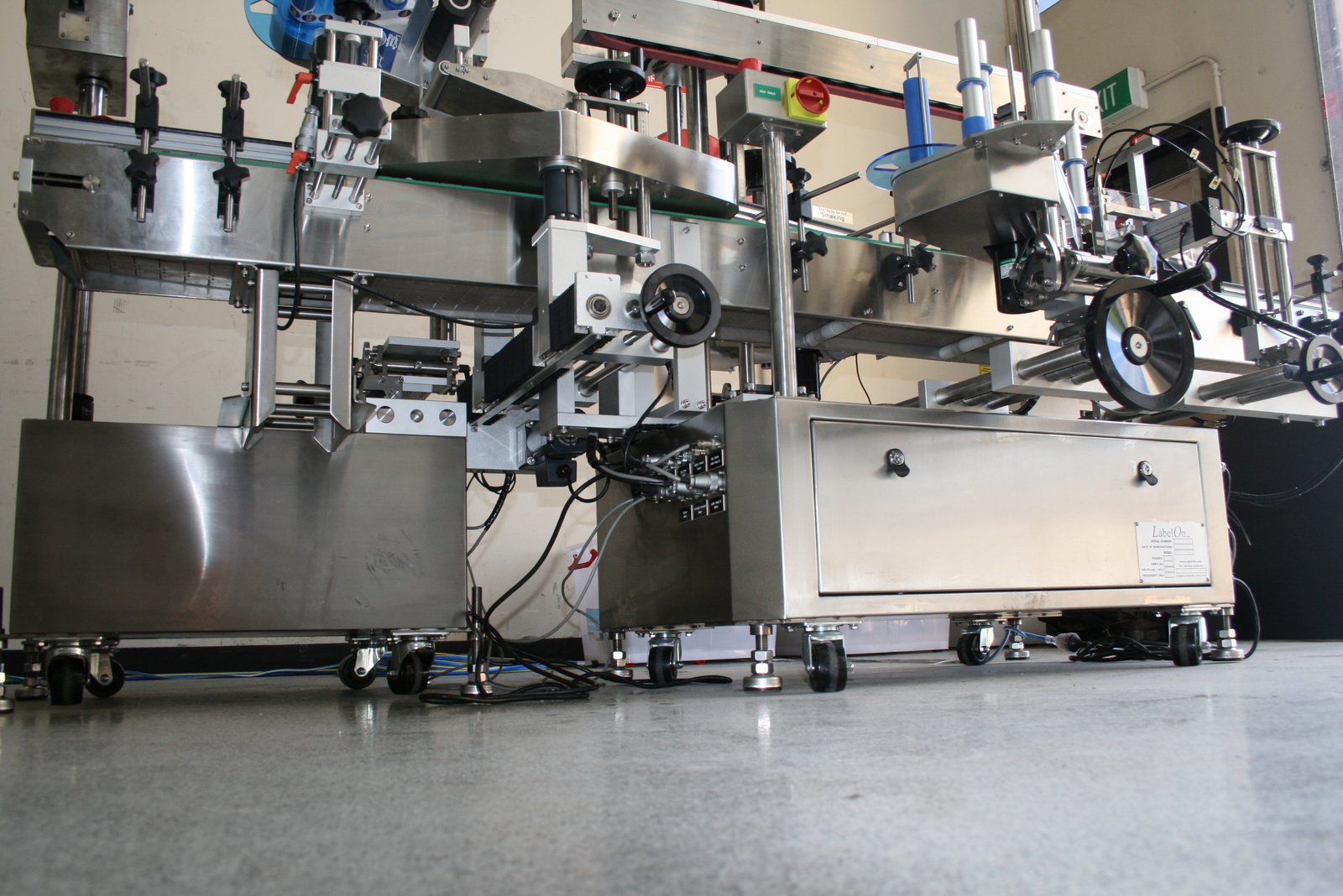 What you are seeing is the result of that experience – the LabelOn Modular label applicator. It is a labeler that can be sold and represented throughout the world. This machine is manufactured and configured in modules to cover a vast majority of the most common labeling tasks.
This LabelOn Modular machine has modules available to label front and back labeling of Flat Sided Bottles , Oval Sided Bottles and Round Bottles or Jars.
The Round products can have a single label of up to 100% Wrap label. The Round bottles can also have their label or labels placed; orientated to a reference feature or mark like a bottle handle or a pre-existing label.
Adding to this impressive configuration of modules is the Extra Labeling System or E.L.S. – seen here ready to label  the top of a product as it passes through the LabelOn Modular machine. On its own the ELS is an impressive piece of labeling equipment, capable of placing spot labels from Above, the Side or On to angled panels like necks of bottles. The ELS can be wheeled up to existing conveyor lines to work in a Stand-Alone Capacity. However, the real ingenuity of the ELS is its design to “dock” with the LabelOn modular machine and synchronize to the modules of the main machine. Even its controls are passed over to the Main LabelOn modular unit.
Clients, like contractors with multiple lines, will appreciate having one or two ELS systems that can dock in minutes to one of their more numerous LabelOn Modular machines for when promotional spot labels are required; say on the neck of the bottle or even its cap.
For a given labeling task the required modules integrate smoothly and present a machine that has the adjustments and feel of a machine that was dedicated to that task. Adjustments are easy to make and self-evident in most cases. These adjustments are easy to record and replicate for future runs.
Extensive 3D mechanical records, and comprehensive electrical records of each machine enable over the phone and internet based sessions to quickly identify service items or parts. To date, we have not come across a service requirement where a LabelOn technician had to attend on site; it was all handled remotely.
The LabelOn Modular Machine offers:
Having decided it is definitely time to automate your label application, the next step is finding a labeller that you can afford.
Labelling a flat or oval sided bottle you can be faced with new machine proposals that range from USD 30K to USD 120K. Labelling a round bottle can involve new machine proposals of USD 13K to USD 100K. These price tags can be scary and fall into a range that you simply cannot afford.
A potentially very low cost source for second hand and used labelling equipment are auctions for packaging equipment. A simply internet search will bring up many auction houses and listings. There are also places that buy up lots of surplus or liquidated packaging lines and then offer the line components separately.

Ideally you will have well qualified electrical and electronic staff and a good mechanical workshop to support the used labelling machinery. The model machine you find should be a machine that spare parts can be purchased from the manufacturer or the representative to that manufacturer. A good preliminary step would be to do research on the cost and availability of spare parts for that model from that manufacturer. A word of warning here, some used equipment may be past the service life of the machine and hence spare parts may no longer be available.
When reviewing the used label applicator you locate there may not be the luxury of seeing the machine operate or having a guarantee the machine will work for your application. Therefore, look for machinery that, when advertised, is advertised as “versatile”. If you are not sure about what a versatile labelling machine means take a good look around the LabelOn™ Modular Label Applicators.
The machinery should have facilities for very easy and quick adjustments to cater for product a wide range of product widths and heights. The label Heads should have tilt controls in two directions. Tilt adjustments should be available along the direction of the product conveyor and towards the product conveyor. Given there is double axis tilt control there is a very good chance the machine can be configured to the shape of your product, from the shape of the products for which the used equipment was originally produced and supplied. The electronics should be Modular and ideally plug in and plug out electronics. The electronics should use standard components. Steer very clear of used label applicators that have proprietary electronics and touch controls as these will usually be very expensive to replace and very difficult to repair without paying top dollar from the machine supplier.
Wherever possible get as much information from the original machine supplier to determine the capability and serviceability of the used label applicator. There are bargains to be found and there are cheap used labelling machines to be found, on some rare occasions it can turn out to be that $50 lying on the side of the road that nobody else noticed. In most cases used labeling machines will represent a compromise on what you need as compared to what is available.